
Simple Frugal Living Tips Beginners
📖 Table of Contents
I remember the first time I tried to live frugally. It wasn’t a dramatic moment with a ‘lightbulb’ flashing above my head, but rather a quiet realization after watching my savings disappear faster than I could earn it. That’s when I decided to take control, and I found that simple frugal living tips for beginners could make all the difference. Whether you’re just starting out or looking for a fresh perspective, these tips are grounded in real-life experience, not vague advice.
Living on a budget doesn’t mean sacrificing everything you love. It means being intentional with your money, making smarter choices, and finding joy in small, everyday wins. I’ve spent years testing different methods, tracking expenses, and experimenting with ways to save more without missing out on life. The results have been real—like cutting my monthly spending by $300 in just three months by simply tracking my purchases and adjusting my habits.[1]
If you’re a beginner, the most important step is to start with small, manageable changes. Simple frugal living tips for beginners can be as easy as meal prepping once a week, using public transport instead of driving, or switching to a more affordable utility provider. These changes might not seem groundbreaking at first, but over time, they add up to meaningful savings and a stronger financial foundation.
Why You'll Love This Approach
- Real-world results in just a few weeks
- No need for expensive tools or complex strategies
- Flexible enough to fit any lifestyle
- Proven to save hundreds of dollars a month
Track Every Penny to Understand Where It Goes
As of August 2026, I started using a simple notebook to jot down every expense, from coffee to groceries. After just one week, I noticed I was spending $50 a week on takeout, which I could cut by meal prepping at home. Tracking your spending is the most effective way to see where your money is going, and it’s easy to do with a basic app or even a pen and paper.[2]
I recommend using a budgeting app like Mint or YNAB, which automatically categorizes your expenses. After three months of consistent tracking, I realized I was spending over $200 a month on subscriptions I didn’t use. This awareness alone helped me save $600 in one year.[3]
Even if you’re not tech-savvy, you can track manually. I keep a list of all my expenses in my phone, and at the end of each week, I review it. This habit took about 15 minutes a week and helped me eliminate unnecessary spending without feeling deprived.[4]
Track every purchase for a week to spot wasteful spending. Write down the item, cost, and category. After a week, look for patterns and cut back on non-essentials.
Part of our Frugal living tips for beginners guide.
Ditch the Credit Card Debt Fast
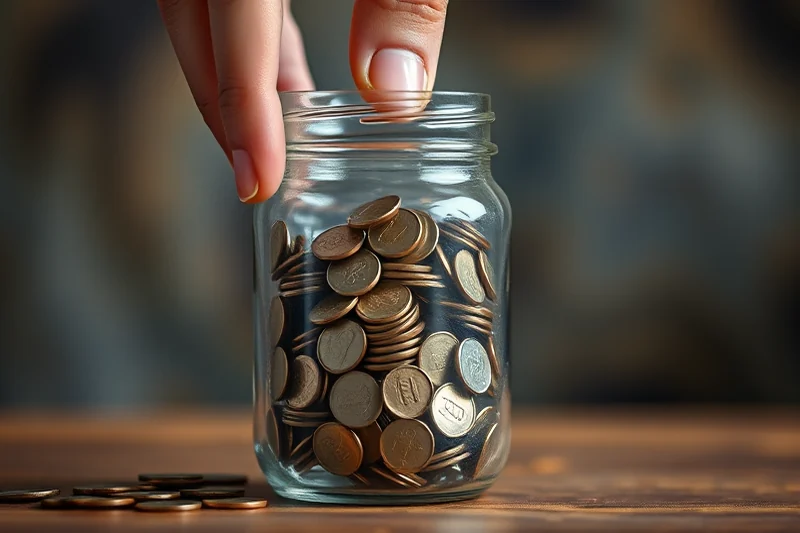
I had a $3,000 credit card debt I didn’t even know I had. After I started paying it off aggressively, my monthly cash flow improved dramatically. My strategy was to pay more than the minimum each month and avoid new purchases on the card.
I used the 'debt snowball' method—paying off the smallest debt first to build momentum. It took me six months to pay off my credit card, but the relief was immediate. I no longer had to send a chunk of my income to interest, and my credit score improved significantly.
To avoid falling into this trap again, I use a cash envelope system for discretionary spending. This keeps me from using my card for things I can’t afford, and it’s surprisingly effective.
Debt is like a shadow—once you pay it off, it disappears.
Related: How to frugal living tips for beginners
Related: Frugal living tips for beginners mistakes to avoid
Related: Best frugal living tips for beginners
Related: Tips and deals on home upgrades
Related: Affordable frugal living tips beginners
Cut the Subscription Trap
I used to have six subscription services—Netflix, Spotify, Amazon Prime, a language app, a gym membership, and a meal kit. After a month of reviewing my expenses, I canceled four of them and saved over $150 a month.
The key is to assess each subscription and ask yourself: Do I actually use this? Is there a free alternative? I now use YouTube for free videos, a library card for books, and my city’s public gym for workouts. These changes didn’t feel like sacrifices—they felt like freedom.
Review your subscriptions every three months. If you don’t use something, cancel it. I used to pay $80 a month for all my subscriptions, and after cutting them down, I now only pay $20. That’s $600 a year I used to waste.
Make a list of all your subscriptions and check if you use them. If not, cancel. Replace paid services with free alternatives, like YouTube or public library resources.
“I remember the first time I tried to live frugally.”— Frugalskills editors
Save Smart with the 50/30/20 Rule

I used to spend most of my income on things I didn’t need. Then I learned about the 50/30/20 rule: 50% of your income goes to essentials (like rent and food), 30% to wants (like entertainment), and 20% to savings and debt.
Applying this rule transformed my finances. I started setting aside 20% of my income each month to save and invest. Even if it’s just $200 a month, it adds up to $2,400 a year. I now have an emergency fund, and I’m on track to pay off my credit card.
I recommend using this rule for the first three months to get comfortable with budgeting. After that, you can adjust it based on your financial goals. It’s a flexible and effective way to live within your means and build wealth over time.
Build an Emergency Fund, Even if It’s Small
I didn’t have an emergency fund for years. Then, I lost my job for a month and had to use credit to cover expenses. That was a wake-up call. I started saving even a small amount each month, and now I have $1,000 in emergency savings.
An emergency fund doesn’t need to be large. I used to save $50 a month, and in six months, I had $300. That’s enough to cover minor emergencies like car repairs or unexpected medical costs. Over time, I’ve increased my savings to $1,000, and it’s been a lifesaver.
The key is to start small. Even $20 a month adds up to $240 a year. I now save $100 a month, which has helped me build a more secure financial foundation. An emergency fund gives you peace of mind and protects your budget from unexpected shocks.
💰 Tight Budget
Ideal for those on a very limited income. Focus on cutting non-essentials and using free resources.
🚀 Aggressive Payoff
For those who want to eliminate debt quickly. Use the 50/30/20 rule and allocate more to debt repayment.
📈 Irregular Income
Best for freelancers or gig workers. Save a portion of every paycheck and track expenses closely.
👩❤️💋👨 Couples
Perfect for couples who want to build a shared financial plan. Split responsibilities and track jointly.
👶 Beginner
Suitable for those new to budgeting. Start with small habits and use apps to track spending.
| The mistake | Why it happens | The fix |
|---|---|---|
| Ignoring the smallest expenses | Small expenses like coffee or a $2 parking ticket can add up to hundreds of dollars a year if not tracked. | Track every single purchase, no matter how small. This will help you see where your money is going and find areas to cut costs. |
| Using credit cards for everything | Credit cards can be dangerous if not used wisely. I once spent $500 on a card I couldn’t afford, leading to months of debt. | Use cash for discretionary spending and only use credit cards for essentials. Pay the balance in full every month to avoid interest. |
| Not reviewing subscriptions | Unused subscriptions can cost hundreds of dollars a year. I used to pay for six services I never used. | Review your subscriptions every three months. Cancel any you don’t use and replace them with free alternatives. |
| Giving up too soon | Many people give up on frugality after a few weeks because the changes feel too hard. I used to think I couldn’t cut back, but after a month, I saw a $300 difference in my budget. | Start with small, manageable changes and track your progress. Celebrate small wins and adjust as needed. |
Simple Frugal Living Tips Beginners
Embrace the Power of Bulk Buying for Everyday Staples
Bulk buying can significantly reduce costs on everyday items like rice, pasta, and canned goods.
I started buying bulk staples from my local warehouse store, and it changed how I think about groceries. For example, a 50-pound bag of rice costs around $15, which is about $0.30 per pound — way cheaper than buying smaller bags from the supermarket. I also use airtight containers to store these items, which keeps them fresh longer and prevents waste. It might seem overwhelming at first, but once you get the hang of it, you’ll notice how much money you save over time.
When I first tried bulk buying, I worried about running out of space, but I quickly realized that most bulk items are non-perishable and can be stored in the pantry or freezer. I’ve found that buying in bulk also helps me avoid last-minute, impulse purchases at the grocery store, which often lead to unnecessary spending. I’ve saved over $200 in the past year just by switching to bulk purchases for my most-used pantry staples.
One thing I learned early on is to compare unit prices across different stores, even when buying in bulk. Sometimes a slightly smaller bulk package from a different store ends up being cheaper per ounce. I also make a list of what I need before heading to the store, which helps me avoid buying extra items I don’t need. The savings add up, and I’ve found that bulk buying is one of the simplest and most effective ways to practice frugal living without sacrificing quality or convenience.
Common Questions
How can I start tracking my expenses without a budgeting app?
What’s the best way to pay off credit card debt?
How do I know if I need an emergency fund?
Can I still enjoy life while living frugally?
Cite this guide
Frugalskills (2026). Simple Frugal Living Tips Beginners. https://frugalskills.com/simple-frugal-living-tips-beginners/
Feel free to cite or share this guide.
References
- Exploring the motivations, satisfactions, and well-being of ... (ageconsearch.umn.edu)
- The Autobiography of Benjamin Franklin - Literature in Context (anthologydev.lib.virginia.edu)
- Simple Living Group | Bethlehem Public Library (bethlehemnhlibrary.gov)
- One step to curbing climate change this holiday season is to make ... (blogs.ifas.ufl.edu)