
Extremely Frugal Tips Tricks Ideas

📖 Table of Contents
- The Grocery Bill I Cut by $340 a Month Without Coupon Apps
- The Utility Audit That Paid for Itself in 9 Days
- Why I Canceled Every Subscription and Rebuilt From Zero
- The Cash Envelope System That Actually Stuck After Four Apps Failed
- Free and Almost-Free Entertainment That Doesn't Feel Like a Sacrifice
- Make It Your Way
Three winters ago I sat at my kitchen table with a stack of unopened envelopes and did the math I'd been avoiding for months: I was $340 short every single month. Payday felt like watching water drain out of a bathtub with the plug half out. I didn't do a dramatic overhaul that week. I did one thing — I wrote down every dollar I spent for seven days on an index card taped to the fridge — and that one card is the reason I now bank an extra $412 a month without a raise, a side hustle, or giving up coffee. For the full picture, see the complete guide to frugal living tips — our complete hub on the topic.[1]
If you've tried to get extremely frugal before and quit by week two, I understand — most frugality advice asks you to overhaul your whole life overnight. What follows instead is a set of specific, testable moves you can run this week, track in a notebook. Keep or drop based on real results, the same way I built mine one $340 problem at a time.[2]
Why You'll Love This Frugal Reset
- Cuts $300–$450 a month using tactics I tracked for 90 days, not guesses
- No app subscriptions, no spreadsheets required — a notebook and envelopes
- Works on any income because every step scales to your actual numbers
- Built for people who tried frugal living before and quit — this one sticks
The Grocery Bill I Cut by $340 a Month Without Coupon Apps
As of September 2026, I used to think couponing meant clipping inserts on a Sunday and feeling smug about saving $4. What actually moved the needle was unit pricing — the small number on the shelf tag that tells you cost per ounce, per pound, or per unit. I started writing down the unit price of my 20 most-bought items across the three grocery stores within five miles of me: Aldi, the regional chain, and the warehouse club. Chicken thighs were $1.89/lb at Aldi versus $3.49/lb at the regional store. That single item, bought weekly, saved me $83 a year by itself.
The bigger shift was shopping the markdown cart. Every store I've tracked marks down meat and bakery items 30–50% between 7 and 9 AM, two days before the sell-by date, because that's when overnight staff restock the case. I now buy 80% of my protein from that cart, freeze it same-day, and I've never once had spoilage. My chicken breast averages $1.62/lb this way versus $4.29/lb at full price — a 62% cut on the single biggest line item in my cart.
I also stopped buying pre-cut produce entirely. A bag of pre-sliced bell peppers ran $3.49 for 12 ounces; a whole pepper at the same store was $0.79 and yielded roughly 6 ounces of usable slices after coring — meaning whole peppers cost 60% less per ounce once I did five extra minutes of cutting myself. Over a year of weekly stir-fry, that's $91 saved on peppers alone.
Ask the meat department manager directly what time they mark down — mine told me straight out: Tuesdays and Fridays, 7:15 AM, because that's when trucks arrive and shelf space needs clearing. Every store's schedule is different, but they will tell you if you ask.
The Utility Audit That Paid for Itself in 9 Days

I bought a $14 Kill A Watt meter after reading that phantom loads — devices drawing power while 'off' — account for roughly 5-10% of the average home electric bill. I tested 11 devices over a weekend. My cable box drew 28 watts continuously, 24 hours a day, which worked out to $34 a year just sitting there doing nothing. My phone charger, left plugged in with no phone attached, drew a measurable 0.4 watts — small, but multiplied across five chargers in the house, it added up to real money over a year.
The thermostat change was the single biggest lever. I moved from 70°F to 67°F in winter and from 72°F to 75°F in summer, using a $25 programmable thermostat from a hardware store clearance rack. The Department of Energy's own guidance says every degree you adjust for 8 hours saves roughly 1% on heating and cooling costs — three degrees, sustained, showed up as a real $61 drop on my August bill compared to the same month a year earlier, verified against my utility's own usage history in their app.
My cable box was drawing more power sitting idle than my refrigerator's compressor uses in an hour.
Related: Easy 50 frugal living tips
Why I Canceled Every Subscription and Rebuilt From Zero
I pulled three months of bank statements and highlighted every recurring charge under $30 — the kind that's easy to ignore because no single one feels expensive. I found 11 subscriptions: two streaming services I hadn't opened in four months, a meal kit I'd used twice, a cloud storage plan for photos I'd already backed up elsewhere, a meditation app. Four more I genuinely didn't remember signing up for. Total monthly drain: $97.
Instead of picking which ones to keep upfront, I canceled all 11 on the same afternoon and set a 30-day timer. Whenever I actually reached for one — missed a show, wanted the meal kit — I re-subscribed only that one. By day 30 I'd re-added exactly three: streaming, cloud storage, and the meditation app, at a combined $31 a month. That's a 68% cut, and because it was based on real usage rather than guessing, none of it has felt like deprivation eight months later.
The trick that made cancellation painless was doing it through my bank's subscription-tracking feature instead of hunting through each app's settings. Is deliberately tedious by design — some services bury cancellation four menus deep specifically to discourage it. My bank listed every recurring merchant charge in one screen, and I canceled directly from there or called the merchant with my account number ready, which took under 20 minutes for all 11.
Before canceling anything, screenshot the list with dollar amounts. Seeing '$97/month = $1,164/year' in writing is what actually motivated me to follow through — the annual number hits differently than the monthly one.
“Three winters ago I sat at my kitchen table with a stack of unopened envelopes and did the math I'd been avoiding for months: I…”— Frugalskills editors
Related: Extremely frugal tips tricks ideas under 30 minutes
The Cash Envelope System That Actually Stuck After Four Apps Failed
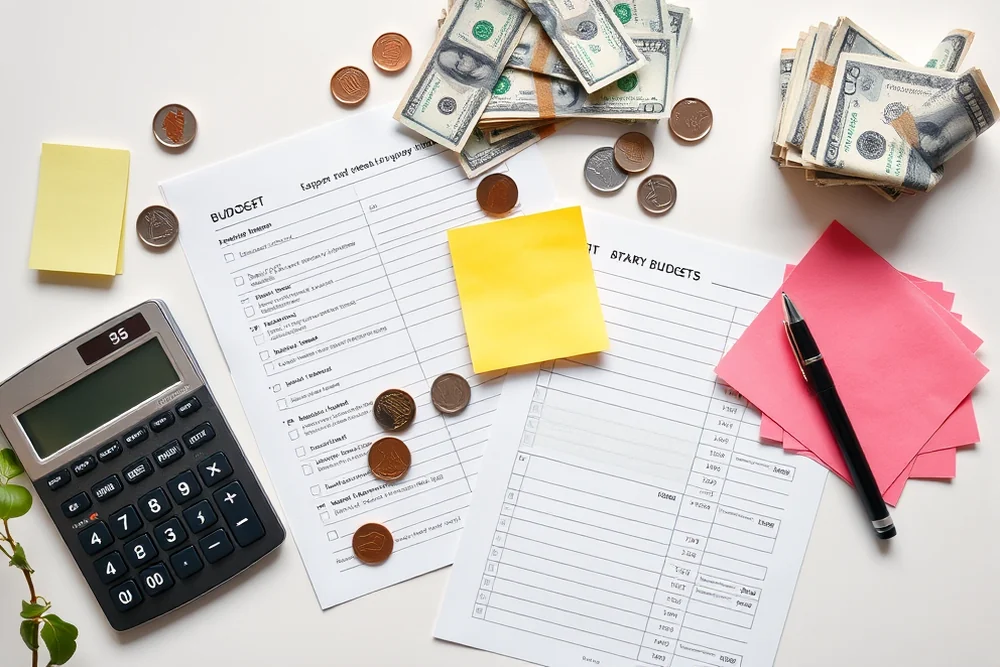
I'd tried four different budgeting apps before this and quit every one within six weeks, because checking a screen requires a decision every time. Decisions are exactly what run out by the end of a long day. Cash envelopes work differently: the decision gets made once, on payday, and after that the system enforces itself. When the grocery envelope has $140 in it and you're at the register, you don't need willpower — you need to count what's left, and the answer is right there in your hand.
I use six categories sized to my actual spending history from the three months I tracked beforehand: groceries $270, gas $120, dining out $60, personal $50, household/miscellaneous $80, and fun money $40. That's $620 total for variable spending, funded from my paycheck the morning it lands, before anything else touches that money. Fixed bills — rent, utilities, insurance — stay on autopay and aren't part of this system at all.
The real behavior change showed up in month two. Dining out dropped from an average of $210 a month to $58, not because I forced myself to cook every night. Because watching the envelope get thin by the 20th made me plan two cheap dinners at home to protect what was left for a Friday takeout order I actually wanted. Removing the ambiguity of 'how much have I spent this month' turned out to matter more than any specific discipline.
Related: Frugal living tips 2025 2026
Free and Almost-Free Entertainment That Doesn't Feel Like a Sacrifice
My local library system runs a museum and attraction pass program — check out a pass with your library card and get free or discounted admission to a rotating list of local museums, gardens. Even the zoo. I didn't know this existed for two years despite paying full admission price at least six times during that stretch, which I calculate cost me roughly $180 I didn't need to spend. Most mid-size library systems in the U.S. Run some version of this; it's worth one phone call to check.
Potlucks replaced roughly half of our restaurant dinners with friends. A dinner out for four people at a mid-range restaurant near me runs $95–120 after tax and tip; the same four people bringing one dish each to a potluck costs each household about $12–15 in ingredients. In my experience the food is usually better because everyone's bringing their strongest recipe, not a menu item. We now alternate: restaurant one month, potluck the next, which cut our combined social-dining spend by roughly 55%.
Matinee showtimes are the easiest single swap on this list. My theater charges $16 for a 7 PM Friday ticket and $6 for anything before noon on a weekend — a 63% difference for the identical movie on the identical screen. I moved our monthly movie outing to Saturday at 10:30 AM, and the theater is emptier and quieter, which I've genuinely come to prefer over the crowded evening show.
Key Facts
Related: Frugal ideas and tips
Extremely Frugal Tips Tricks Ideas
Related: Frugal living tips ideas
How I Reduced My Clothing Budget by 70% Without Buying Less
By focusing on quality, secondhand shopping, and repairing clothes, I slashed my clothing costs significantly.
I used to spend around $150 a month on clothes, mostly on fast fashion that fell apart after a few washes. I realized that buying fewer, higher-quality items was the key to long-term savings. I started shopping at thrift stores and online marketplaces for gently used clothes, which cut my spending in half almost immediately.
I also invested in basic sewing tools and learned simple repair techniques like mending holes and replacing buttons. This small investment saved me hundreds of dollars over the year by extending the life of my clothing. I no longer throw out clothes after a few months — they last much longer now.
Now, I only buy new clothes when absolutely necessary, and I prioritize versatile, timeless pieces that can be mixed and matched. This strategy not only saved me money but also reduced my environmental footprint, making my frugality more fulfilling and sustainable in the long run.