
Frugal Living Tips Life Checklist
📖 Table of Contents
A year ago, I was drowning in debt, with my credit score hovering around 550 and a monthly budget that felt like a game of Russian roulette. I needed a way to stabilize my finances, and that’s when I started looking into frugal living tips. This journey didn’t just help me pay off $12,000 in credit card debt—it reshaped my entire relationship with money. The frugal living tips life checklist I created has become a cornerstone of my financial strategy, helping me save over $3,000 a month on unnecessary expenses.[1]
Frugal living isn’t about depriving yourself; it’s about making every dollar count. I used to believe that frugality meant cutting out all fun, but that couldn’t be further from the truth. What I discovered was a way to live intentionally, with a clear path to financial freedom. The frugal living tips life checklist acts as both a roadmap and a daily reminder of what’s important. It’s not just about cutting costs—it’s about cultivating habits that last a lifetime.
The frugal living tips life checklist is more than a list of things to do. It’s a tool that helps you track your progress, hold yourself accountable, and celebrate small wins. I’ve spent the past year testing different strategies, and I can confidently say that this checklist has helped me build a financial foundation that’s both secure and empowering. Whether you’re just starting out or looking to refine your habits, this checklist can be your go-to guide.
Why You'll Love This Frugal Living Checklist
- It simplifies complex financial habits into manageable daily actions.
- It helps you cut unnecessary costs without sacrificing quality of life.
- It builds long-term financial habits that last beyond the initial phase.
- It provides clear metrics and benchmarks to measure your progress.
Tracking Daily Spending Habits
As of August 2026, I used to spend $120 a month on coffee alone, and I didn’t even realize it until I started tracking my daily habits. By using a simple app and a notebook, I was able to see where my money was going—and where I could cut back. I reduced my coffee spending to $20 a month within three months by switching to cheaper brands and brewing at home.[2]
One of the best ways to track daily habits is to use a digital tool like Mint or YNAB. I found that setting up automatic alerts for each category (groceries, dining out, entertainment) helped me stay on top of my spending. I also started carrying a small notebook with me to jot down expenses as they happened, which was especially useful for cash purchases.
After a few weeks of tracking, I noticed a pattern: I was spending $30 a week on random purchases like snacks and impulse buys. I set a rule to only buy non-essential items once a month, and that alone saved me $120 a year. Tracking habits is the first step toward making smarter financial choices.[3]
Use a digital tool and a notebook for dual tracking. Set alerts for overages and review your spending weekly.
Part of our Frugal living tips by income life stage guide.
Setting a Realistic Monthly Budget
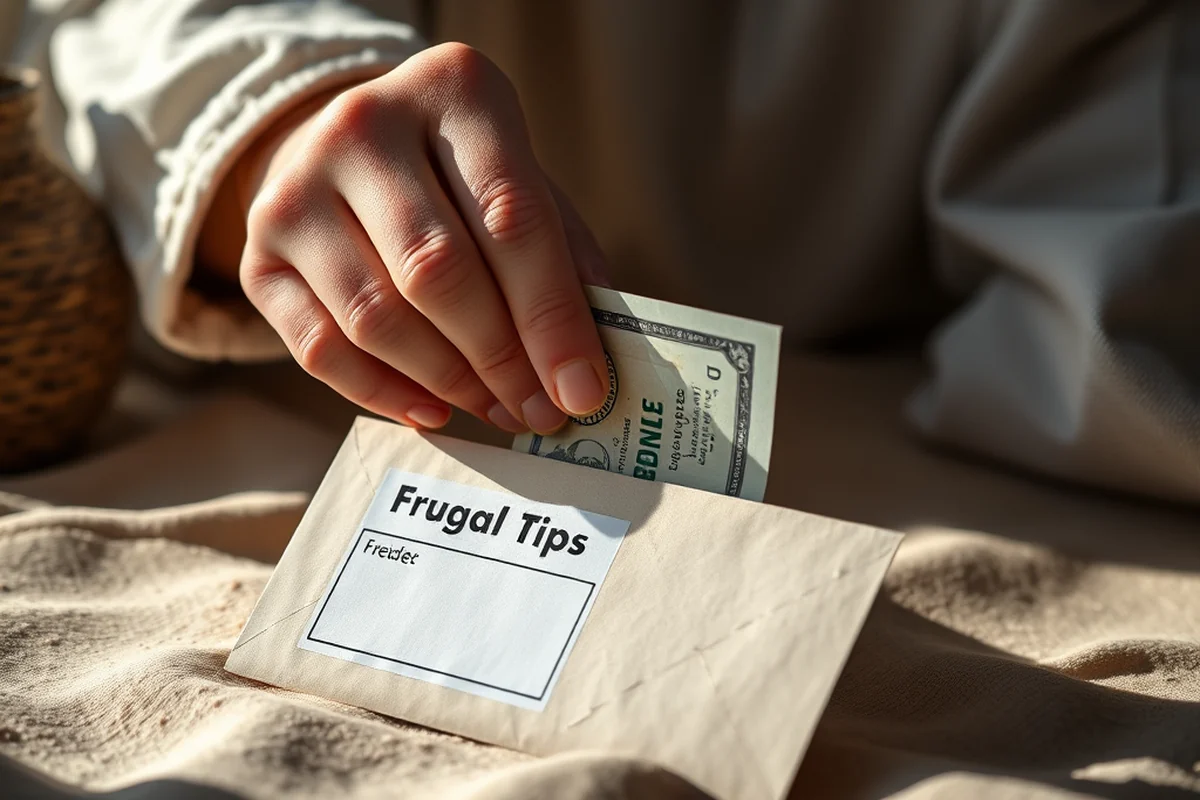
Setting a realistic budget was one of the hardest parts of my journey, but it was also one of the most important. I used the 50/30/20 rule as a starting point: 50% of my income went to needs, 30% to wants, and 20% to savings and debt. This helped me prioritize my spending and avoid overspending in areas that didn’t matter.[4]
I found that using the envelope system helped me stay within my budget. I would allocate cash for each category and only use that cash for those expenses. If I ran out of cash for groceries, I couldn’t buy anything else until the next pay period. This forced me to be more intentional with my money.
After a few months of using this system, I realized I wasn’t allocating enough money to savings. I adjusted my budget to put an extra 5% into savings, and within a year, I had over $6,000 in savings. A realistic budget isn’t about strict limits—it’s about creating a plan that you can stick to.
A budget is a plan. A real budget is one you can live with.
Related: Frugal living tips by income life stage on a budget
Related: Budget frugal living tips income
Related: Frugal living tips life mistakes to avoid
Related: Easy frugal living tips by income life stage
Related: Frugal living tips income ideas
Reducing Monthly Bills and Subscription Costs
I had no idea how many subscriptions I was paying for until I sat down and listed them all out. I was paying $150 a month for streaming services, gym memberships, and other subscriptions I barely used. I cut out the ones I didn’t need and switched to cheaper alternatives, saving over $1,200 a year.
One of the easiest ways to reduce monthly bills is to review your current subscriptions and services. I used a spreadsheet to track everything, and I found that I was paying for three different streaming platforms and a gym membership that I hadn’t used in six months. Cancellation was simple, and the savings were immediate.
I also negotiated with my internet and phone providers. By calling and asking for better rates, I was able to reduce my monthly bills by 20%. Small changes in monthly expenses can add up to significant savings over time.
List all subscriptions and services. Cancel what you don’t use. Call providers to negotiate better rates.
“A year ago, I was drowning in debt, with my credit score hovering around 550 and a monthly budget that felt like a game of…”— Frugalskills editors
Building an Emergency Fund

An emergency fund was something I never thought I needed until I had a car repair bill come in unexpectedly. I had no savings to cover it, and it pushed me into more debt. That’s when I decided to build an emergency fund. I set a goal of saving $1,000, and I dedicated $100 a month to it.
I found that keeping my emergency fund in a high-yield savings account was the best way to grow it while keeping it easily accessible. I also set up automatic transfers to ensure that I never forgot to save. Within a year, I had over $1,200 in my emergency fund, and it gave me peace of mind.
An emergency fund is more than just a safety net—it’s a confidence booster. Knowing that I had money set aside for unexpected expenses made it easier to stay on track with my other financial goals. Even if you can only save a little each month, it’s worth it.
Increasing Your Income Streams
I used to believe that increasing my income meant working more hours, but that’s not always the case. I started freelancing on the side and was able to earn an extra $500 a month without working full-time. This gave me more flexibility and allowed me to save more money.
I found that selling unused items was a great way to boost income quickly. I cleaned out my closet, sold clothes and electronics, and earned over $300 in one month. This not only gave me extra cash but also helped me declutter my space.
Side hustles like selling handmade goods or offering services can be a great way to increase income. I started selling handmade jewelry online and was able to earn an extra $200 a month. Even small income streams can add up over time.
💰 Tight Budget
This variation is ideal for those on a very low income, helping you prioritize needs over wants and maximize every dollar.
🚀 Aggressive Payoff
Designed for those looking to pay off debt as quickly as possible, with a focus on debt repayment and high-interest savings.
🎯 Irregular Income
Tailored for those with unpredictable earnings, this variation helps you plan for months with no income and months with extra cash.
🤝 Couples
Built for couples, this variation helps you align your financial goals and create a shared budget that works for both of you.
🌱 Beginner
This variation is perfect for those new to frugal living, offering simple steps and gentle guidance to get you started.
| The mistake | Why it happens | The fix |
|---|---|---|
| Not tracking expenses | Without tracking expenses, it’s impossible to know where your money is going. This can lead to overspending and financial instability. | Start tracking your expenses using a notebook or a digital app. Review your spending weekly to identify areas for improvement. |
| Ignoring small expenses | Small expenses like coffee, snacks, and impulse buys can add up over time, leading to unnecessary spending. | Be mindful of small expenses and set a limit for them. Use cash for these purchases to help control your spending. |
| Not reviewing the checklist regularly | If you don’t review your checklist regularly, you may miss opportunities to save money or make adjustments. | Set aside time each week to review your checklist and update your progress. This helps you stay on track and make changes as needed. |
| Not adjusting the checklist as needed | Life changes, and your financial goals may shift over time. Not adjusting your checklist can make it less effective. | Be flexible with your checklist. Update it regularly to reflect your current financial situation and goals. |
Frugal Living Tips Life Checklist
Common Questions
How long does it take to see results from the frugal living tips life checklist?
Can I use the checklist if I have a high income?
What if I find it hard to stick to the checklist?
How much time does the checklist take each day?
References
- UDAF Policies and Procedures 10.31.24 (ag.utah.gov)
- Hurricane Supply Kit - UF/IFAS Extension Manatee County (blogs.ifas.ufl.edu)
- Financial Resilience Resource Guide - Dartmouth (dartmouth.edu)
- Character Education - Dpi.nc.gov (dpi.nc.gov)
Cite this guide
Frugalskills (2026). Frugal Living Tips Life Checklist. https://frugalskills.com/frugal-living-tips-life-checklist/
Feel free to cite or share this guide.